
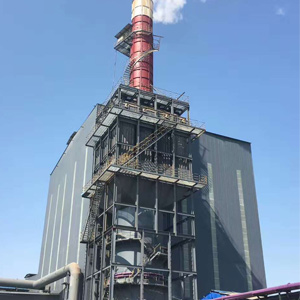
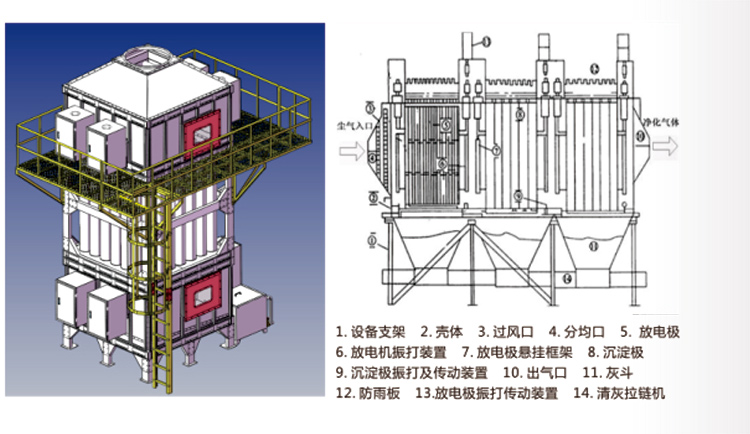
The main components in the structural diagram of a wet electrostatic precipitator include: an electromagnetic field (which is divided into an anode zone and a cathode zone), an insulation device, a spray washing system, and a chimney.
Wet Electrostatic Precipitator (WESP)
The main components in the structural diagram of a wet electrostatic precipitator include: an electromagnetic field (which is divided into an anode zone and a cathode zone), an insulation device, a spray washing system, and a chimney.
Technical Principle
Its working principle is as follows: A high-voltage current device transmits direct current to the demister. When acid mist passes through the electrostatic demister, a strong electric field is formed between the corona wire (cathode) and the acid mist collection plate (anode) within the electromagnetic field. This electric field ionizes air molecules, instantly generating a large number of electrons, positive ions, and negative ions. The negative ions then attach to the acid mist particles. Through the mutual attraction between positive and negative charges, the acid mist particles are adsorbed onto the anode plate. Subsequently, the spray system rinses off the acid mist adsorbed on the anode plate.