
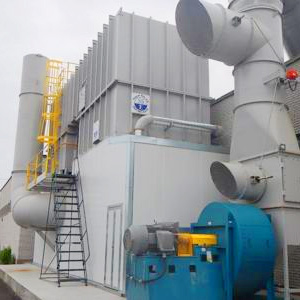
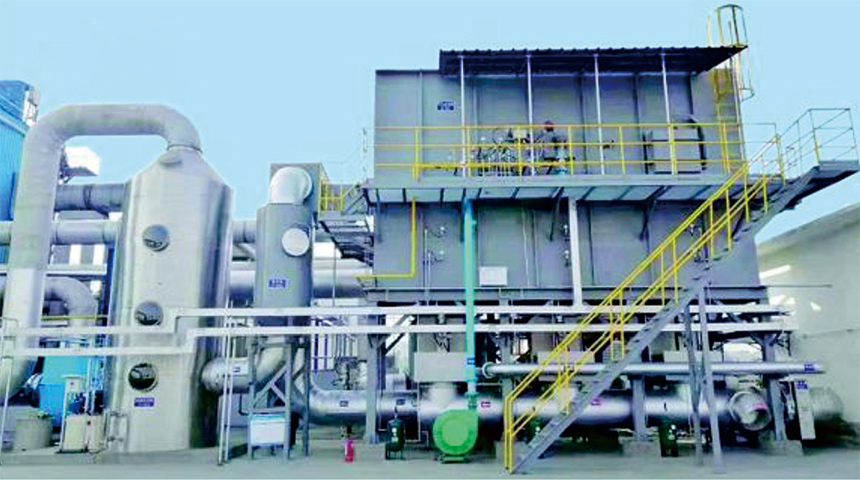
A Regenerative Catalytic Oxidizer (RCO) is an organic waste gas treatment equipment that combines low-temperature catalytic oxidation with heat storage technology.
Technical Principle
A Regenerative Catalytic Oxidizer (RCO) is an organic waste gas treatment equipment that combines low-temperature catalytic oxidation with heat storage technology. Developed based on Regenerative Thermal Oxidizer (RTO) technology, this new type of volatile organic compound treatment equipment inherits the advantage of RTO in fully storing and recovering heat energy. During the catalytic oxidation process, the surface of the catalyst enables the enrichment of reactant molecules on it. The catalyst reduces the activation energy required for the reaction, accelerates the oxidation reaction, and increases the rate of the oxidation reaction. Under the action of a specific catalyst, organic substances undergo oxidative decomposition at a relatively low temperature (250°C - 300°C), generating CO₂ and H₂O while releasing a large amount of thermal energy.
Two Types of Catalysts Currently Available for Users to Choose From
Cordierite Honeycomb Ceramic Carrier Catalyst: The carrier is cordierite honeycomb ceramic, and the catalyst consists of palladium (Pd) and platinum (Pt). This type of catalyst results in low system resistance.
Randomly Packed Carrier Catalyst: The carrier is randomly packed filler, and the catalyst consists of palladium (Pd) and platinum (Pt). This type of catalyst leads to high system resistance.
Advantages
The use of a catalyst lowers the reaction temperature, thereby reducing equipment costs;
Compact equipment size and small floor space requirement.
Disadvantages
The catalyst is prone to poisoning, requiring high cleanliness of the organic waste gas.